
Growing cannabis can be a rewarding experience, but it can also come with its fair share of challenges. One of the most common issues that cannabis growers face is yellowing leaves. Yellow leaves on your cannabis plants are often a sign that something is wrong, and it’s essential to address the issue quickly to prevent further damage to your crop. In this blog, we’ll explore the possible causes of yellowing leaves in cannabis plants and how you can fix these issues to ensure a healthy and vibrant grow.
Understanding the Basics of Cannabis Leaf Yellowing
Before diving into the specific causes of yellowing leaves, it’s important to understand that yellowing is a symptom, not a disease itself. When cannabis leaves turn yellow, it’s typically a sign that the plant is under stress. This stress can be caused by various factors, including nutrient deficiencies, environmental issues, pests, and diseases.
Common Causes of Yellowing Leaves in Cannabis Plants
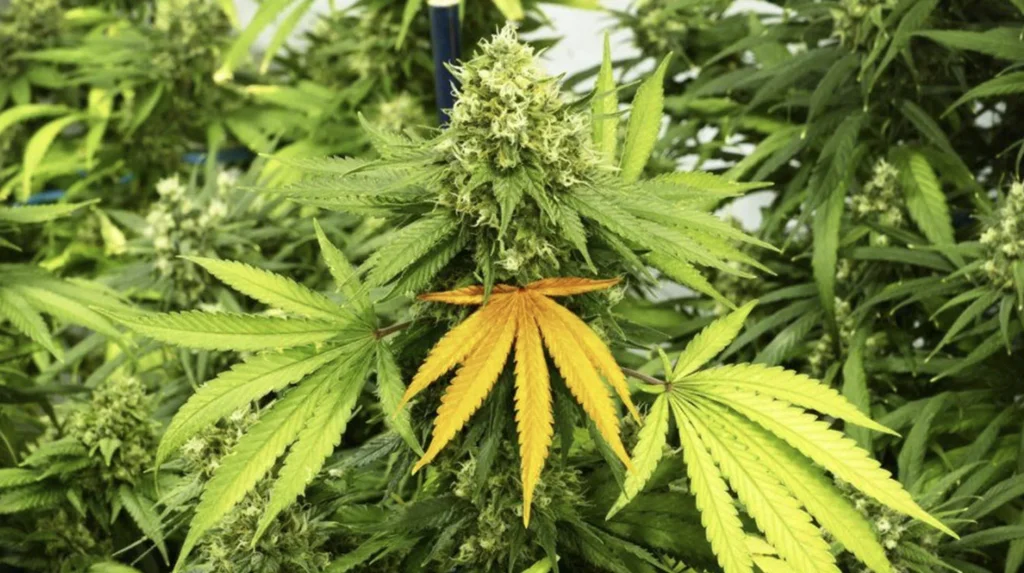
1. Nutrient Deficiencies
One of the most common reasons for yellowing leaves is nutrient deficiencies. Cannabis plants require a balanced mix of nutrients to grow healthily, and any imbalance can lead to yellowing. Here are some specific nutrient deficiencies that can cause yellow leaves:
- Nitrogen Deficiency: Nitrogen is an essential nutrient for cannabis plants, playing a crucial role in photosynthesis and leaf development. A lack of nitrogen can cause the lower leaves to turn yellow and eventually fall off. This is because nitrogen is a mobile nutrient, meaning the plant will move it from older leaves to newer growth when it’s in short supply.
- Magnesium Deficiency: Magnesium is vital for chlorophyll production, and a deficiency can lead to yellowing between the veins of the leaves, often starting with the older leaves.
- Iron Deficiency: Iron is necessary for chlorophyll synthesis, and a deficiency can cause new leaves to turn yellow while the veins remain green. This often occurs when the pH of the growing medium is too high, preventing the plant from absorbing iron.
How to Fix It:
- To address nutrient deficiencies, start by checking the pH of your soil or growing medium. Cannabis plants typically thrive in a pH range of 6.0 to 7.0 in soil and 5.5 to 6.5 in hydroponic systems. Adjusting the pH can often resolve issues with nutrient absorption.
- If the pH is within the appropriate range, consider feeding your plants with a balanced fertilizer that contains all the essential nutrients. For nitrogen deficiency, a fertilizer with a higher nitrogen content can help, while magnesium and iron deficiencies can be addressed with specific supplements.
2. Overwatering or Underwatering
Improper watering is another common cause of yellowing leaves. Both overwatering and underwatering can stress the plant, leading to yellow leaves.
- Overwatering: When cannabis plants are overwatered, their roots can become waterlogged, leading to a lack of oxygen. This can cause the roots to rot and the leaves to turn yellow. Overwatering also creates a breeding ground for pathogens that can further harm the plant.
- Underwatering: On the other hand, underwatering can cause the plant to become dehydrated, leading to yellow, dry, and crispy leaves. The plant will be unable to transport nutrients effectively, exacerbating the yellowing.
How to Fix It:
- Ensure that you are watering your plants appropriately based on their stage of growth and the environmental conditions. The soil should be allowed to dry out slightly between waterings to prevent waterlogging.
- Use pots with good drainage to avoid water accumulation at the bottom. If you’re growing in a hydroponic system, make sure the roots have access to oxygen through proper aeration.
3. Environmental Stress
Cannabis plants are sensitive to their environment, and any significant changes or extreme conditions can lead to yellowing leaves. Common environmental stressors include:
- Temperature Stress: Cannabis plants prefer temperatures between 70°F and 85°F during the day and slightly cooler at night. Temperatures that are too high or too low can cause the leaves to yellow. Extreme heat can lead to heat stress, while cold temperatures can slow down the plant’s metabolism, leading to nutrient deficiencies.
- Light Stress: Both too much and too little light can cause yellowing leaves. If the plant is too close to the grow lights, the leaves can become scorched and turn yellow. Conversely, if the plant isn’t receiving enough light, it can become weak and yellow due to insufficient photosynthesis.
How to Fix It:
- Monitor the temperature in your grow space regularly to ensure it stays within the ideal range. Use fans, air conditioning, or heating as needed to maintain a stable environment.
- Adjust the distance between your grow lights and the plants to prevent light stress. Ensure that your plants are receiving the appropriate amount of light for their stage of growth.
4. Pests and Diseases
Pests and diseases can also cause cannabis leaves to turn yellow. Common pests that attack cannabis plants include spider mites, aphids, and thrips. These pests feed on the plant’s sap, weakening it and causing yellowing leaves. Diseases such as root rot, powdery mildew, and leaf septoria can also lead to yellow leaves.
How to Fix It:
- Regularly inspect your plants for signs of pests or disease. If you notice any pests, use organic insecticides or introduce beneficial insects like ladybugs to control the infestation.
- For diseases, ensure good air circulation in your grow space to prevent mold and mildew. Remove any affected leaves and consider using organic fungicides to treat the problem.
5. pH Imbalance
As mentioned earlier, the pH level of the soil or growing medium plays a crucial role in nutrient absorption. If the pH is too high or too low, the plant may struggle to absorb essential nutrients, leading to yellowing leaves.
How to Fix It:
- Regularly test the pH of your soil or hydroponic solution and adjust it as needed. Using pH up or pH down solutions can help bring the pH into the ideal range for cannabis growth.
When Is Yellowing Normal?
While yellowing leaves are often a sign of a problem, it’s important to note that some yellowing is normal, especially during the later stages of the plant’s life cycle. As cannabis plants enter the flowering stage, it’s natural for the lower leaves to yellow and die off as the plant redirects its energy towards bud development. This type of yellowing is not a cause for concern.
Also Read: Understanding the Stages of Cannabis Growth: A Complete Guide
Conclusion
Yellowing leaves on your cannabis plants can be a worrying sight, but with careful observation and prompt action, most issues can be resolved. Whether it’s a nutrient deficiency, watering problem, environmental stress, or pest infestation, identifying the root cause of yellowing leaves is the first step towards restoring your plants to health. By maintaining a balanced growing environment and addressing issues as they arise, you can ensure a successful and bountiful harvest. Happy growing!